
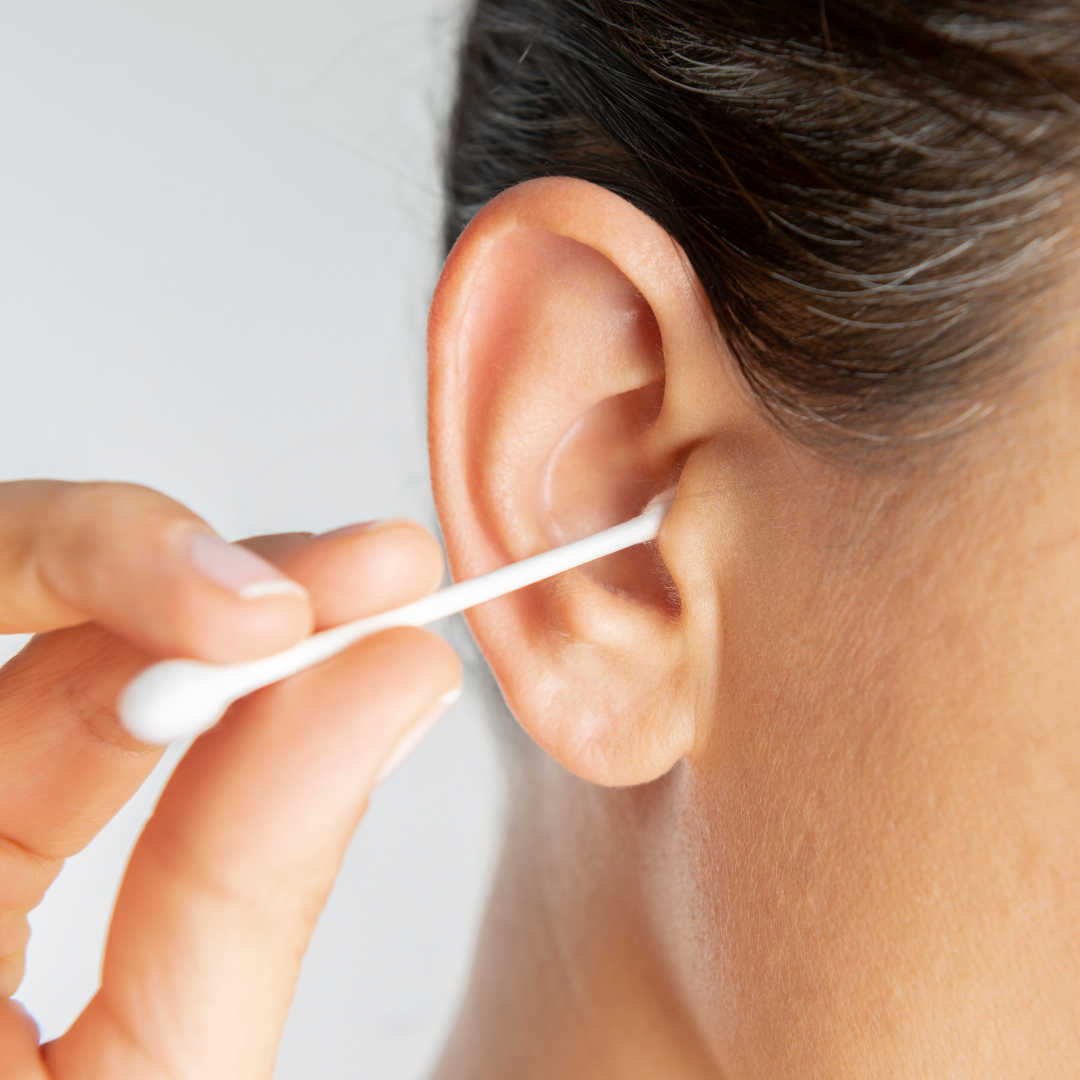
While cotton buds look like simple cleaning instruments, inserting them directly into your ear canal complicates hygiene and can injure sensitive structures. We can determine whether earwax actually needs removal and recommend a method suited to your ear health. Ear canals typically maintain themselves without assistance; nonetheless, if stubborn buildup develops, we help individuals safely eliminate excess wax.
Understanding the Risks of Using Q-Tips in the Ear
Natural earwax, medically termed cerumen, does not represent bodily dirt. This substance captures environmental dust, restricts bacterial colonization, conditions the delicate canal walls, and defends fragile skin. Jaw movement and normal skin migration gradually carry old wax toward the ear opening, where it flakes away or washes off during bathing.
Inserting a cotton swab directly into the auditory canal interferes with this natural clearance mechanism. While you may see a tiny amount of wax on the swab, the device generally shoves the rest deeper toward the eardrum. Ongoing cotton swab use regularly condenses wax into a solid obstruction, causing a congested feeling that drives repetitive cleaning attempts.
Cotton applicators are suitable for tracing the exterior folds of the ear, but they must remain entirely outside the canal opening.
Types of Ear Injuries Caused by Cotton Swabs
The epithelial surface inside the ear canal remains exceptionally fragile and easily abraded. Minor physical scratches induce pain, trigger localized bleeding, and invite bacterial colonization, increasing outer ear infection rates. Furthermore, the cotton fibers may separate from the stick, leaving a foreign body lodged within the canal.
Potential audiological complications include:
- Severe earwax impaction near the tympanic membrane
- Skin abrasions, tissue swelling, severe irritation, and active bleeding
- Infection of the ear canal
- Foreign matter or cotton material lodged in the ear
- Traumatic puncture or laceration of the eardrum
- Damage to the tiny acoustic middle-ear bones
- Temporary conductive loss or permanent auditory changes
- Ringing in the ears, balance disruption, or sharp ear pain
Even though major trauma is uncommon, someone bumping your arm, a sudden hand slip, or deep over-insertion can cause severe damage.
Recommended Schedules and Timelines for Cerumen Removal
Most individuals do not need to perform earwax maintenance on a calendar schedule. Normal ears migrate cerumen toward the opening constantly, allowing routine bathing to cleanse the visible exterior. Frequent overcleaning creates dry, irritated canal surfaces while amplifying the risk of severe impaction or microbial invasion.
Removal becomes appropriate when wax blocks the canal, prevents us from examining the eardrum, interferes with a hearing aid, or causes discomfort.
Clinical Guidance for Safe At-Home Cerumen Care
When cerumen creates no clinical symptoms, leaving the canal alone remains the most prudent approach. Wipe only the outer ear with a soft, damp cloth, and let the canal clean itself.
When wax needs softening, we may recommend an over-the-counter cerumen-removal product or drops containing ingredients such as mineral oil, glycerin, saline, or carbamide peroxide. Apply only the specified dosage and never exceed the designated application duration outlined on the label. Cease use at once if you experience localized pain, acute vertigo, cutaneous rash, or intensifying discomfort.
At-home ear flushing is not suitable for all ears and demands prior clinical verification and step-by-step guidance from a provider. Under no circumstances should you ever use a pressurized dental oral irrigator in the ear. Steer clear of dangerous tools such as ear candles, metal curettes, lighted camera tools, bobby pins, and home vacuum devices. Such unapproved devices easily burn canal walls, cut fragile skin, puncture the eardrum, or drive cerumen deeper.
When to Seek Audiological Care for Cerumen Impaction
Arrange a consultation when aural fullness continues after drop therapy, wax is severely impacted, or home interventions prove ineffective. Expert removal is the safest path for patients who struggle to hold still, individuals with narrow ear canals, hearing aid wearers, or those with surgical contraindications to irrigation.
Arrange an immediate clinical evaluation for:
- Ear pain, persistent itching, or tenderness
- Visible blood, purulent discharge, clear fluid drainage, or offensive ear odors
- Fever or swelling around the ear
- New acoustic tinnitus sounds or unstable balance sensations
- Sudden hearing drops or auditory deficits that remain after wax removal
- Suspected tympanic membrane tears or retained cotton foreign bodies
- Recurrent impaction that affects hearing devices
Treat sudden hearing loss in one ear as a medical emergency rather than assuming it’s wax. Fast diagnostic testing reliably differentiates a conductive wax plug from an acute, time-sensitive sensorineural emergency.
How Healthcare Providers Extract Impacted Earwax
Our clinical team begins by evaluating the ear canal using an otoscope or binocular microscope to confirm cerumen impaction and inspect for infection, trauma, or tympanic membrane perforations. Selecting the optimal extraction technique depends upon cerumen density, canal geometry, patient health history, prior otologic surgeries, and procedural comfort.
Safe audiological extraction methods include:
- Medical-grade wax softeners administered prior to or during the procedure
- Controlled ear flushing using warm, body-temperature water on intact eardrums
- Controlled vacuum micro-suction under continuous visual monitoring
- Manual removal with a loop, curette, or small forceps
Operating under direct magnification allows the clinician to avoid sensitive canal walls and halt instantly if the patient experiences pain. Resolving highly compacted or dry earwax often involves integrating multiple clinical removal techniques. After removal, the ear can be reexamined to confirm that the canal and eardrum are healthy. When symptoms like fullness, tinnitus, vertigo, or hearing loss continue, supplementary audiological assessments can uncover alternate conditions.
Schedule Professional Earwax Removal
If your ear feels occluded or your hearing acuity drops, book a professional consultation with our team rather than using a Q-Tip. Your clinical visit will cover a comprehensive review of symptoms, otologic surgical history, hearing aid utilization, home care efforts, and metabolic contributors to wax buildup. Contact us to request an earwax-removal appointment.